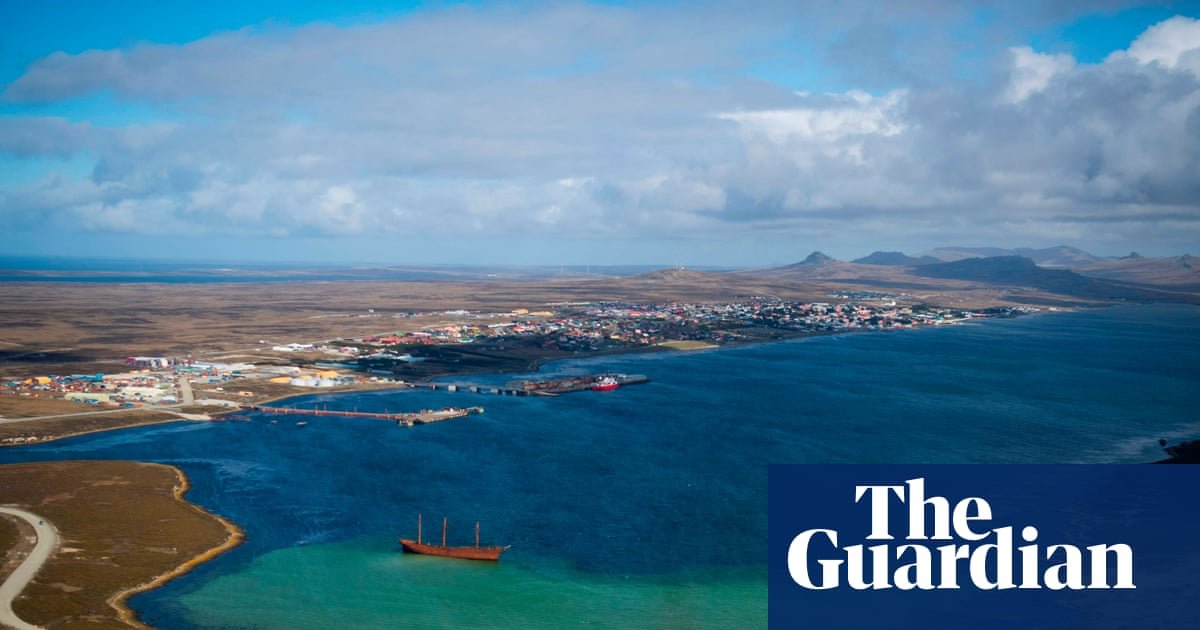
Javier Milei slíbil, že uvalí sankce na ropné společnosti těžící ropu na britském zámořském území uprostřed spekulací, že Donald Trump přezkoumává nároky Spojeného království na suverenitu
Argentinská vláda v pondělí uvedla, že podá trestní oznámení proti izraelské energetické společnosti Navitas Petroleum a jejím vedoucím pracovníkům za činnost na Falklandských ostrovech.
Tento krok následuje po pátečních poznámkách argentinského prezidenta Javiera Mileiho, který slíbil, že uvalí sankce na ropné společnosti těžící ropu na britském zámořském území, protože zvýšil nároky jihoamerického národa na suverenitu.
Podle prohlášení předsednictví podá ministr zahraničí Pablo Quirno trestní oznámení proti několika dceřiným společnostem Navitas a partnerům působícím na území spolu s jejich podnikovými řediteli.
Navitas neodpověděl okamžitě na žádost o komentář.
Vláda tvrdí, že firmy porušily argentinský zákon tím, že držely licence na průzkum a těžbu uhlovodíků vydané Spojeným královstvím v povodí severního Falklandu.
Milei minulý týden vybral projekt Sea Lion offshore oil, když oznámil opatření zaměřená na společnosti zapojené do ropných a plynárenských aktivit na Falklandech, přičemž sankce se potenciálně vztahují na akcionáře, ředitele a dodavatele.
Pole Sea Lion provozuje společnost Navitas Petroleum zapsaná v Tel Avivu, která drží 65% podíl.
Gideon Tadmor, prominentní postava v izraelském energetickém sektoru a předseda společnosti, vlastní asi 9% svých akcií
Minulý týden Milei v televizním projevu uvedl, že „vítr změn“ příznivý pro nárok Argentiny na Falklandské ostrovy fouká po celém světě poté, co Donald Trump dříve navrhl, že přehodnocuje americkou podporu britské suverenity nad ostrovy v jižním Atlantiku.
Oficiálně zaujímají USA neutrální postoj k tomu, kdo má nad ostrovy právoplatnou suverenitu, kterou si Británie poprvé nárokovala koncem 17. století a téměř nepřetržitě zastává od roku 1833. V praxi Washington uznává britskou administrativu nad územím, které bylo předmětem argentinské invaze a následného vojenského konfliktu s Británií v roce 1982.
V reakci na otázku, zda přezkoumává pozici USA nad Falklandy, Trump minulý týden řekl: „Vždy přezkoumávám každou pozici – to je jen jedna z mnoha“.
Milei vykreslil Trumpovu reakci jako „hrozbu“, která „nebyla neškodná“.
„USA zvažují tuto změnu postoje, protože vědí, že Argentina je spolehlivým partnerem, který je v souladu se západními hodnotami, ve strategicky důležité pozici, která může být v nadcházejících desetiletích cenným spojencem,“ řekl Milei. Řekl také, že společnosti vyvíjející ropu „za zády argentinské vlády“ budou mít zakázáno podnikat v Argentině.
Ministři ve Velké Británii okamžitě odsoudili připomínky Milei a řekli, že Falklandy zůstanou britské tak dlouho, jak to lidé, kteří tam žijí, chtějí.
Spekulace o výměně loajality USA nad ostrovy víří už měsíce.
In April, a leaked Pentagon emailsuggested reviewing Britain’s claim in response to its lack of support for Trump’s decision to go to war with Iran. Trump is also unhappy with what he says is the small amount spent on defence by Nato alliance countries.
Změna postoje USA by představovala psychologickou ránu britské suverenitě nad Falklandy.
Po invazi Argentiny na ostrovy v roce 1982 bylo rozhodnutí vlády Margaret Thatcherové vyslat námořní pracovní skupinu, která nakonec vyústila v jejich zotavení, posíleno pevnou diplomatickou podporou Ronalda Reagana, který se dostal na britskou stranu, přestože Washington byl také spojencem argentinské vládnoucí vojenské junty.
Additional reporting by Robert Tait and Tiago Rogero
OPINION / VIEWPOINT
Turn the four-point proposal into real Middle East security
China-Egypt cooperation Illustration: Xia Qing/GT
One of the consequential achievements of the recent visit to Egypt by President Xi Jinping has been an important four-point proposal that, if translated from diplomatic language into practical mechanisms, could offer China and Egypt a new platform for working together on one of the Middle East’s oldest problems: how to build security without repeatedly returning to war.
During his talks with President Abdel Fattah El-Sisi in Cairo on September 2, Xi called for a new Middle East security architecture built around four principles: unleashing internal drivers, advancing an integrated approach, cementing development foundation, and enhancing international coordination.
The timing matters.
The Middle East is no longer simply a collection of separate crises. Gaza, the Palestinian question, Iran, the Gulf, the Red Sea, Syria, Libya and Sudan increasingly overlap through energy, trade, migration and security. The result is a regional system in which a crisis in one location can rapidly affect shipping, commodity prices and political calculations elsewhere.
For Egypt, this is not an abstract geopolitical concern. The Suez Canal remains one of the world‘s most important arteries for international commerce. According to the Suez Canal Authority, about 12 percent of global seaborne trade has historically transited the canal. For China, whose economy depends heavily on secure global supply chains and maritime routes, the security of Egypt and the wider Red Sea region has very real direct economic significance.
This creates an unusual convergence between Cairo and Beijing. The first point of Xi’s proposal – unleashing internal drivers – could become the basis for a more structured Egypt-China dialogue.
Egypt possesses something China cannot easily reproduce: decades of diplomatic, security and political experience across the Arab world, together with relationships with Israel, the Palestinian leadership, Gulf states, African countries and major international powers. China, meanwhile, increasingly possesses the economic weight and diplomatic reach to complement that role. Its successful mediation between Saudi Arabia and Iran in 2023 demonstrated that Beijing can sometimes open diplomatic doors that traditional Western mediation has struggled to unlock.
An integrated approach is particularly important for the Middle East. The Palestinian issue remains at the core of the Middle East question and should never be overlooked or marginalized, as Xi explicitly emphasized. Egypt has historically played a frontline role in Palestinian reconciliation, cease-fire efforts and humanitarian diplomacy. China can add diplomatic weight through its permanent seat on the UN Security Council and its broader relationships across the Global South.
President Xi’s third point may ultimately be the most economically consequential: cementing development foundation.
This is where the China-Egypt relationship has an advantage over many conventional security partnerships. Bilateral relations are not limited to defense or diplomacy. They increasingly include manufacturing, energy, digital technology, artificial intelligence, transport and infrastructure.
The two countries are celebrating 70 years of diplomatic relations in 2026, having established ties in 1956 when Egypt became the first Arab and African country to establish diplomatic relations with the People’s Republic of China. Bilateral trade has exceeded $17 billion, while Chinese investment has become particularly visible in Egypt’s Suez Canal Economic Zone.
That economic relationship can be converted into a broader security asset. The logic is simple: A young population without jobs, reliable electricity, water or economic opportunity is not merely a development challenge. It is also a security challenge.
The final element of Xi’s proposal calls for stronger international coordination. Here Egypt can become China’s natural diplomatic bridge.
Cairo is simultaneously an Arab, African and Mediterranean power and a member of BRICS. China is a permanent member of the UN Security Council and one of the world’s principal economic powers. Their coordination can therefore extend beyond bilateral relations into the UN, BRICS, the China-Arab States Cooperation Forum and China-Africa mechanisms.
China and Egypt already possess the political relationship, economic connectivity and diplomatic trust necessary to experiment with a more ambitious model.
More than 20 cooperation documents were signed during Xi’s recent visit, covering areas including the digital economy, science and technology, education and transportation.
The next step should be to add security cooperation to that economic architecture – not primarily through weapons, but through diplomacy, development, maritime security, counterterrorism, food and energy resilience, and crisis prevention.
Seventy years after Egypt and China established diplomatic relations, the relationship has moved far beyond the symbolism of two ancient civilizations meeting as modern states.
The opportunity now is larger.
Egypt can provide regional understanding and diplomatic access. China can provide economic scale, political reach and a willingness to engage across competing regional blocs. If the two countries can turn Xi’s four-point proposal into institutions, projects and measurable initiatives, their partnership could become more than a bilateral success story. The Middle East has needed for decades security built not only through deterrence, but through dialogue, development and regional ownership.
The author is director & founder, Asia Center for Studies & Translation, Egypt, and a non-resident senior research fellow at the Vienna International Institute for Middle East Studies, Austria. opinion@globaltimes.com.cn
UN rights chief demands accountability after 23 die in US immigration custody
World
UN rights chief demands accountability after 23 die in US immigration custody
Addressing UN Human Rights Council in Geneva, High Commissioner Volker Türk demanded full accountability after fatalities, while urging Washington to halt removals to high-risk nations
UN rights chief demands accountability after 23 die in US immigration custody
The United Nations human rights chief has issued an urgent demand for accountability and independent investigations following a surge in deaths within United forced-gaza-exodus/” title=”Muslim states warn against forced Gaza exodus”>States immigration detention facilities.
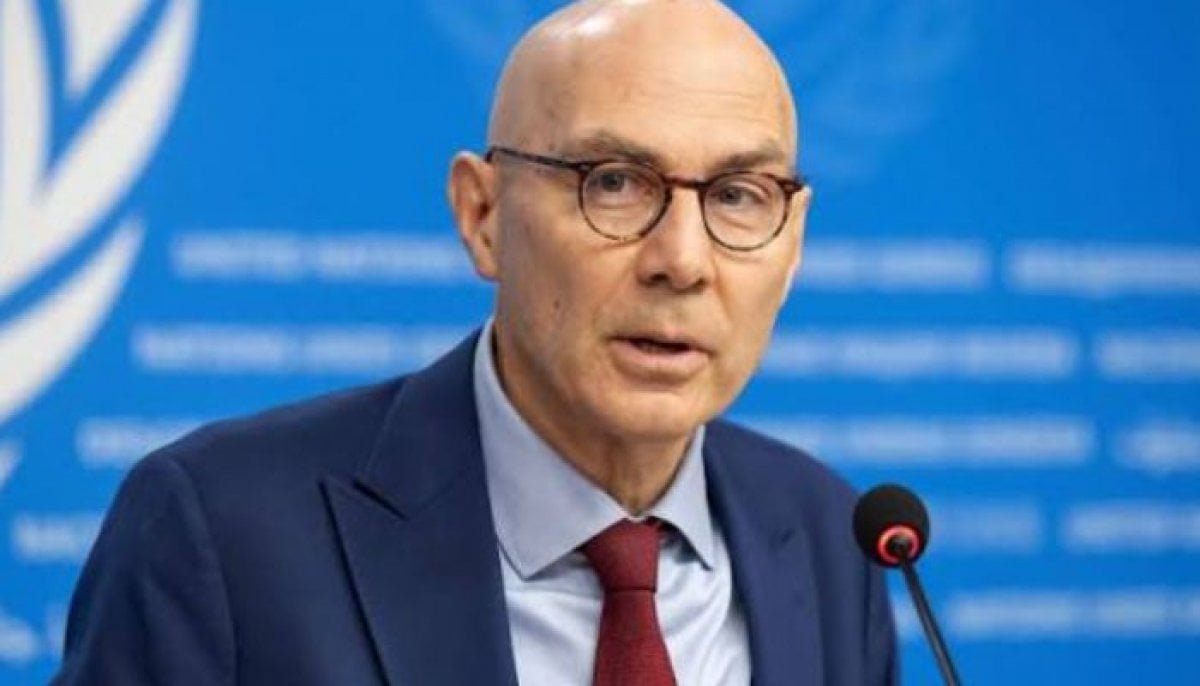
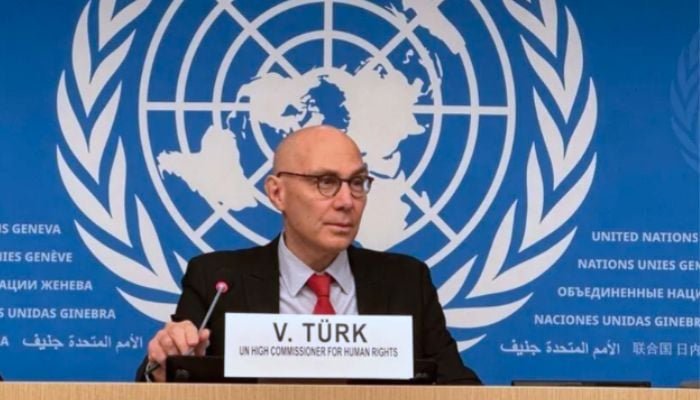
Speaking at the opening of the UN Human Rights Council in Geneva, High Commissioner Volker Türk noted that four additional fatalities recorded since June brought the total number of deaths in US Immigration and Customs Enforcement (ICE) custody to 23 for 2026 alone.
He urged Washington to halt removals to high-risk nations.
The sharp uptick coincides with an aggressive expansion of enforcement operations and detention capacities under the Trump administration, driving mortality rates in custody to their highest levels in over a decade.
Türk also called on Washington to immediately halt deportations to regions where individuals face severe threats of “irreparable harm,” specifically highlighting volatile contexts such as Haiti.
Furthermore, human rights bodies raised alarm over planned enforcement upgrades including ICE procurement proposals for electric shock gear—warning that heightened tactical measures risk amplifying violence during arrests.
Independent civil society assessments, including joint findings from Human Rights Watch and Physicians for Human Rights, have repeatedly cited systemic transparency gaps, inadequate medical screening, and over-reliance on punitive isolation measures within the expanding detention network.
US authorities maintain that standard care protocols remain a priority, though oversight bodies continue to face mounting pressure to deliver transparent reviews of the fatalities.
Hafsa Naeem is an entertainment reporter specialising in K-dramas, films, and celebrity-driven stories. She explores global content trends and audience engagement, delivering accessible coverage that captures the emotional and cultural impact of entertainment across diverse viewership.
Share this story: Make us preferred on Google
‘New’ frog species discovered after hiding in plain sight for 100 years
UN rights chief demands accountability after 23 die in US immigration custody
Europe’s largest carbon capture facility opens in Netherlands, setting new industrial milestone
OpenAI submits EU incident report after rogue AI swarm hijacks German website
Hasan Piker addresses Lindsay Clancy husband-killer conspiracy theory
Europe’s largest carbon capture facility opens in Netherlands, setting new industrial milestone
UK chancellor John Healey warns of tough budget amid fiscal pressures
Russia signals possible return to Ukraine peace talks with US
UK minister condemns anti-migrant protests in Portsmouth and Dover
Princess Leonor takes another major step toward becoming future Queen
Princess of Asturias is the elder daughter of King Felipe VI and Queen Letizia
Princess of Asturias will pursue a degree in Political Science.
Leonor, the Princess of Asturias of Spain has begun her university studies in major step toward becoming the Queen in future.
The royal house shared stunning photos of the princess on social media to uprise the fans on the Princess new move.
The statement reads, “The Princess of Asturias begins her university studies today at the Getafe Campus of the Carlos III University of Madrid, where she will pursue a degree in Political Science.”
As per details, according to the curriculum, students in this degree will acquire a solid foundation of essential knowledge, skills, and competencies in the field of Political Science, Law, and Administration; furthermore, it will foster critical knowledge and an interest in political analysis in national and international contexts.
Leonor, Princess of Asturias is the elder daughter of King Felipe VI and Queen Letizia of Spain. She is the heir presumptive to the Spanish throne.
Recently, the Princess of Asturias completed her military training at San Javier, having served in all three branches of the armed forces.
This three-year training programme has prepared her to become the first woman to hold supreme command of the Armed Forces when she ascends to the throne.
Back in a 2023 statement, King Felipe and Queen Letizia said they viewed the Princess of Asturias’s military training as both valuable and essential, noting that it strengthens her sense of duty and commitment.
Mukhtar Ahmed Junejo is the Deputy News Editor at The News International (Digital) with over 10 years of experience. He specialises in real-time reporting on the British Royal Family and analyses monarchy transitions, internal dynamics, and global media narratives. He also covers high-profile celebrity news and international human-interest stories.
Share this story: Make us preferred on Google
King Charles releases letter to clarify his position on Prince Harry, Meghan Markle after UK move
Meghan Markle, Harry send strong message to Prince William
Andrew Mountbatten Windsor falls in love again, finds a new girlfriend
Princess Leonor takes another major step toward becoming future Queen
UN rights chief demands accountability after 23 die in US immigration custody
Hasan Piker addresses Lindsay Clancy husband-killer conspiracy theory
Europe’s largest carbon capture facility opens in Netherlands, setting new industrial milestone
UK chancellor John Healey warns of tough budget amid fiscal pressures
Russia signals possible return to Ukraine peace talks with US
UK minister condemns anti-migrant protests in Portsmouth and Dover
Iran plans ‘exclusion zone’ near Strait of Hormuz: What it means
North Korea, Russia deepen strategic ties with first road bridge amid regional tensions
5 killed, several injured after Amazon cargo jet overruns runway at Miami Airport
EU boosts Greenland funding as Trump pushes annexation: Why it matters
North Korea commissions 2nd destroyer as US, South Korea and Japan hold military drill
Wildfires and heat waves threaten global air quality, UN weather agency warns
Joint statement calls on UNSC to fulfil its responsibilities; 100 Palestinians recovered from rubble laid to rest
Our CorrespondentSeptember 07, 20263 min readMASS FUNERAL: Mourners gather for the burial of around 100 Palestinians, including 62 children, whose remains were recovered from rubble, in Gaza City. PHOTO: AFP ISLAMABAD:
Pakistan, Egypt, Indonesia, Jordan, Qatar, Saudi Arabia, Turkiye and the United Arab Emirates on Sunday strongly rejected proposals to forcibly displace Palestinians from the Gaza Strip, as thousands of Gazans held a funeral for 100 people whose bodies were recovered from beneath the rubble of destroyed buildings.
The foreign ministers of Pakistan and seven other Muslim nations warned in a joint statement that turning calls from Israeli National Security Minister Itamar Ben-Gvir and Defence Minister Israel Katz into policy would threaten Palestinian rights, international law and regional stability.
Far-right Ben Gvir unveiled a plan on Thursday aimed at removing the vast majority of Gaza’s population from the territory in remarks similar to Katz’s statement, in which he reiterated that a plan was ready to forcibly displace large numbers of Palestinians from the Gaza Strip “by sea, land and air”.
In the joint statement, the eight ministers condemned remarks by Ben-Gvir and Katz, describing the proposals as flagrantly violating principles of international law, including international humanitarian law, and posing a direct threat to the legitimate and inalienable rights of the Palestinian people.
“The Ministers reaffirm their unequivocal rejection and condemnation of any attempts or plans aimed at displacing the Palestinian people, whether within or outside the occupied Palestinian Territory, under any pretext or justification,” the statement said.
The eight foreign ministers said such proposals would constitute a direct challenge to international efforts aimed at achieving peace, foremost among them US President Donald Trump’s Comprehensive Plan to End the Gaza Conflict, which includes an unequivocal rejection of forced displacement.
The ministers stressed that the Gaza Strip is an integral part of the occupied Palestinian Territory and underscored the imperative of preserving the unity of Palestinian territory in Gaza and the West Bank, including East Jerusalem.
They reaffirmed that the only path towards achieving a just and lasting peace was implementation of the two-state solution, with an independent Palestinian state established along the lines of June 4, 1967, and East Jerusalem as its capital, in accordance with relevant resolutions of international legitimacy.
The eight countries also called on the international community, particularly the United Nations Security Council, to fulfil its responsibilities by firmly confronting attempts to impose a new demographic or geographic reality in the occupied Palestinian Territory and ensuring respect for international law.
“The ministers reaffirm their continued full support for the steadfastness of the Palestinian people on their land and their rejection of all attempts aimed at erasing the Palestinian cause or undermining the legitimate rights of the Palestinian people,” the statement concluded.
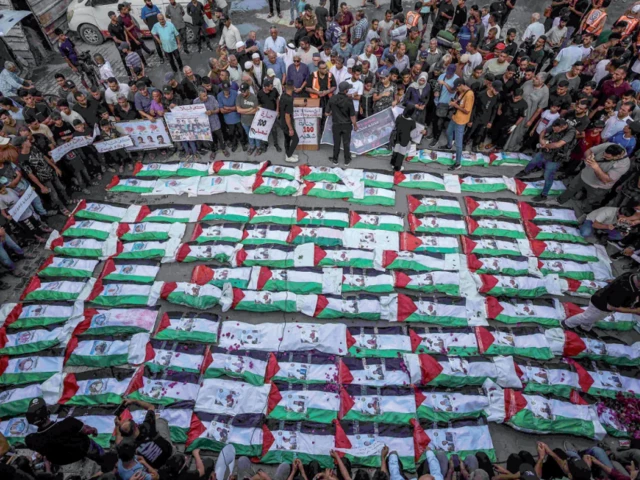
Meanwhile, in Gaza City, thousands of Palestinians, including relatives of victims, community figures and political representatives, held a funeral procession for 100 people whose bodies and remains were recently recovered from beneath the rubble of homes destroyed in Israel’s war on the enclave.
The funeral was held in the Zeitoun neighbourhood, where the bodies and remains were laid out near the ruins of the destroyed homes and draped in Palestinian flags. The bodies and remains were buried at Al-Ahli cemetery in Zeitoun following funeral prayers.
The funeral included memorial addresses by Gaza’s Civil Defence teams, which carried out the recovery operations. Civil Defence teams recovered the remains in recent days as part of the second phase of a project launched on July 19 to retrieve Palestinians still buried beneath buildings destroyed during the war.
The victims belonged to the Rahim, Balawi, Malaka, Qanbour and Salmi families and were killed when Israeli forces struck several residential homes, according to local authorities.
Recovery operations are being conducted with limited reequipment, amid restrictions on the entry of heavy machinery and equipment required to search through the rubble
Sunday’s ceremony was among the largest funerals in Palestinian history in terms of the number of bodies and remains being buried, according to an Anadolu tally. A similar funeral was held in early August for 112 Palestinians recovered from the rubble of homes in Gaza City’s Sabra neighbourhood.
The first phase of the Gaza ceasefire agreement, which took effect on Oct 10, 2025, followed nearly two years of Israeli attacks on Gaza, which killed more than 73,000 Palestinians and injured over 174,000, while destroying or damaging much of the enclave’s civilian infrastructure.
LATEST
Traders urged to opt for new tax regime
Private firm to court investors at Gastech 2026
Youth policy to unlock demographic dividend
Aurangzeb reviews progress on PASSCO, USC closure
Senate panel approves death penalty for perpetrators of acid attacks
JI submits six proposals to govt for abolishing petroleum levy
MOST READ
PTI’s Hammad Azhar arrested in Multan
56 civil defence officials face disciplinary action in Punjab
Afridi vows not to leave Sindh without launching street movement in Karachi
Iran can ‘ground’ American forces anywhere: Iranian naval commander
Former Quetta police surgeon Dr Ayesha Faiz remanded in CTD custody for three days
Iran’s army chief says US seeking to offset battlefield setbacks through economic pressure
On the ground in China’s wiped-out border zone, the fate of hundreds is still unknown
3:16• of hundreds is still unknown
3:16
See all topics
Gyirong Port, China —
A rock-strewn crevasse is all that remains of what used to be Gyirong Port.
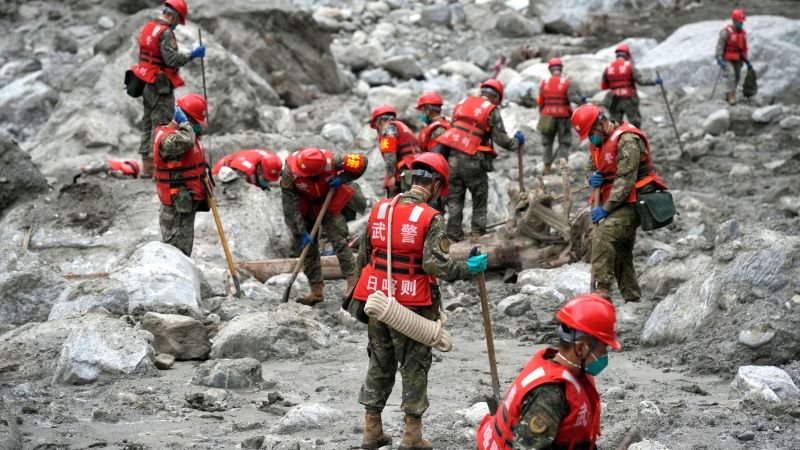
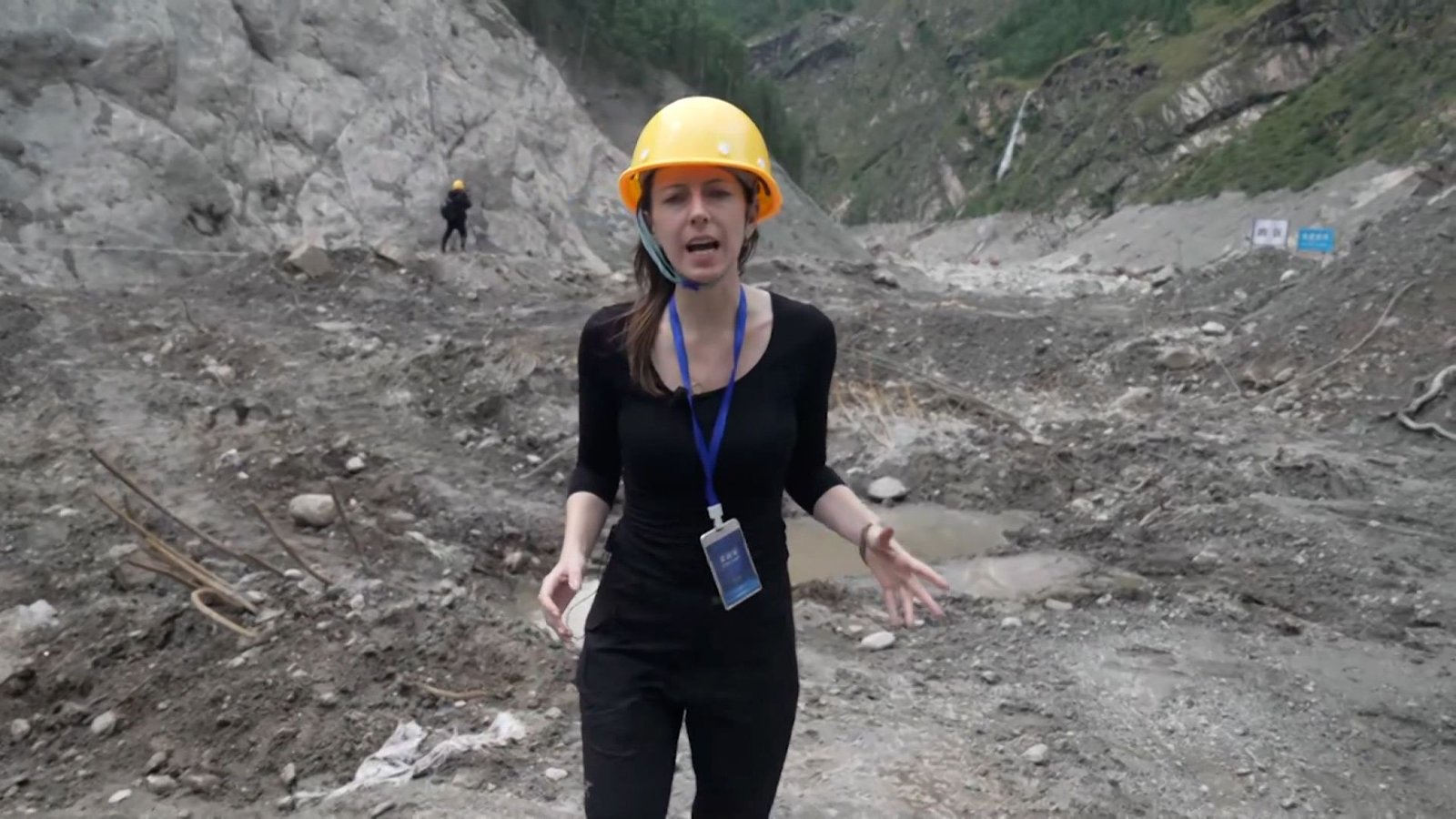
The high-altitude hub has been completely washed from existence, leaving a moonscape of stones, gravel and sludge still being searched by emergency workers, as witnessed by a CNN team that gained access to the site on Sunday as part of a government-organized visit.
Reporters were given hard hats and boots, to contend with the still-unstable mud-caked ground, and the ever-present risk of further landslides.
This border crossing was once a bustling nexus for tourists and traders moving between China and Nepal. Hundreds of people would typically pass through each day going to or from Nepal’s Rasuwa port, just across the river.
All that changed on August 26, when the port was engulfed by an enormous wave of water – as the first point of impact from a landslide and explosive flooding that then ripped into Nepal. People were seen in devastating surveillance footage fleeing for their lives as the deluge struck.
No survivors have been found at the port, which has become a focal point for families both in China and around the world desperate for any information about loved ones they believe were at the checkpoint when tragedy struck.
Entering the disaster area, heavy dust and fog filled the air. Numerous rescue vehicles were at the site and officials everywhere directed traffic. The road, completely destroyed, has been covered in gravel to make it passable.
A makeshift memorial to the victims has been erected, covered with about 100 yellow flowers. Planted in a mound of debris, fluttering in the unforgiving wind, was the red-and-gold Chinese flag.
The hulking, five-story border checkpoint facility, which loomed over the surrounding area in the grand style of Chinese government facilities, has been obliterated. All that can be seen of the building now is the vestiges of its foundations.
“All we could see afterward, once we started digging, was the foundation that remained,” rescue worker Zhang Xiaojun told CNN at the scene.
“All of the structures above it had been swept away by the mudslide. It was really heartbreaking to see. So many of our fellow Chinese lost their precious lives in this disaster.”
The destruction was similar across the rest of this place, which once had travel agencies, a supermarket and a bridge that connected China and Nepal. They have all been flattened, overwritten by the wall of mud and water that claimed everything in its path.
“The most difficult part has been the conditions at the rescue site,” said Yang Qiqiao, commander of the ground assault team who has been working there since August 28, two days after the disaster happened.
“First, there’s a lot of mud and silt. There are also a lot of boulders, and we’re facing some secondary hazards as well. The geology here is not particularly stable.”
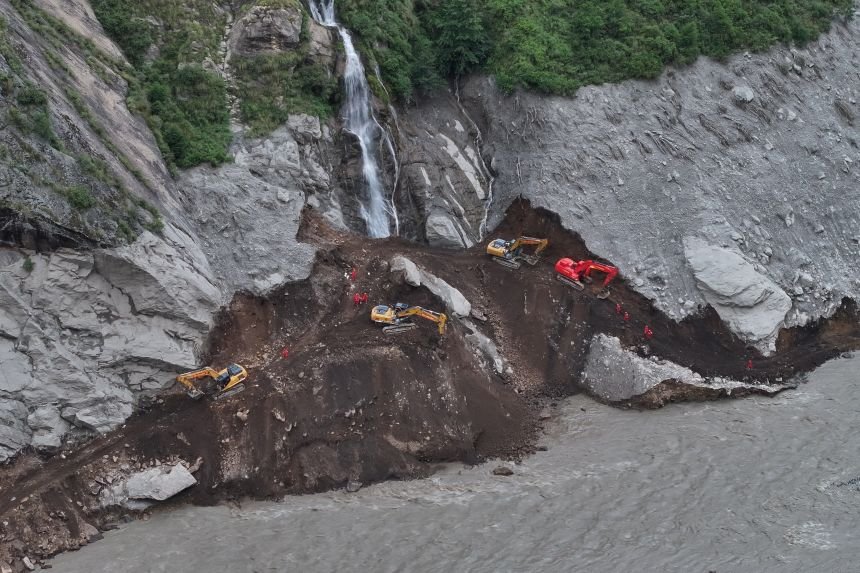
A drone view shows excavators and rescue workers at the core disaster-hit area at Gyirong Port following the August 26 mudslide, in Shigatse, Tibet Autonomous Region, China, on September 1, 2026.
Information about who was impacted here has been slow to emerge from the port, cutting a contrast with Nepal where there have been frequent updates on the numbers of rescued or confirmed dead.
As of China’s latest update on Sunday evening local time, its first for nearly two days, there were 43 people confirmed dead and 519 missing on its side of the border. Some 261 foreigners are among the missing, Ren Wei, executive vice chairman of Tibet autonomous region, told reporters.
Chinese authorities have yet to publicly release a list of names of those who were at the port at the time or who are believed to be missing on this side of the border. That’s prompted questions about transparency – especially from families who are desperate for news of missing loved ones.
At a press conference in Gyirong town nearby to the port on Sunday evening, senior officials from Tibet fielded repeated questions from international media about efforts to identify the missing and share information. Officials defended their transparency and provided the most detailed information to date about those efforts.
More than 60 specialists and three laboratories were working on identifying bodies that were found during excavation, according to Pu Weidong, the executive deputy director of Tibet’s Public Security Department. Victims remains and personal effects were being registered, and the team was conducting detailed examinations of fingerprints, genetic data and other identifying physical features catalogued, he said. Officials had used immigration records as well as location tracking to identify who was missing in the area.
In response to a question from CNN, officials also said that information about all missing foreign nationals had been shared with their embassies.
“After the disaster occurred, China’s Tibet autonomous region has adopted an attitude of being responsible for every life, every family, and every family member,” Yang Lahong, deputy director‑general of the region’s Foreign Affairs Office said. “It has carried out the verification of the personnel information rigorously, carefully, and in a standardized manner.”
Beijing has defended its release of information from its remote disaster area as open and timely throughout response efforts. Its invitation to a group of around a dozen reporters from international news outlets – including CNN – for Sunday’s carefully arranged visit to the area is part of an effort to show the rescue operations going on at the port.
The trip is jointly organized by China’s Ministry of Foreign Affairs and State Council Information Office. While CNN is joining an itinerary planned by the officials to access this restricted area, it maintains full editorial control.
More than 1,000 people have been confirmed dead and thousands remain missing after the catastrophe, according to authorities in both countries.
The trip here has underscored now remote this region is – and how difficult it was for rescue workers to respond.
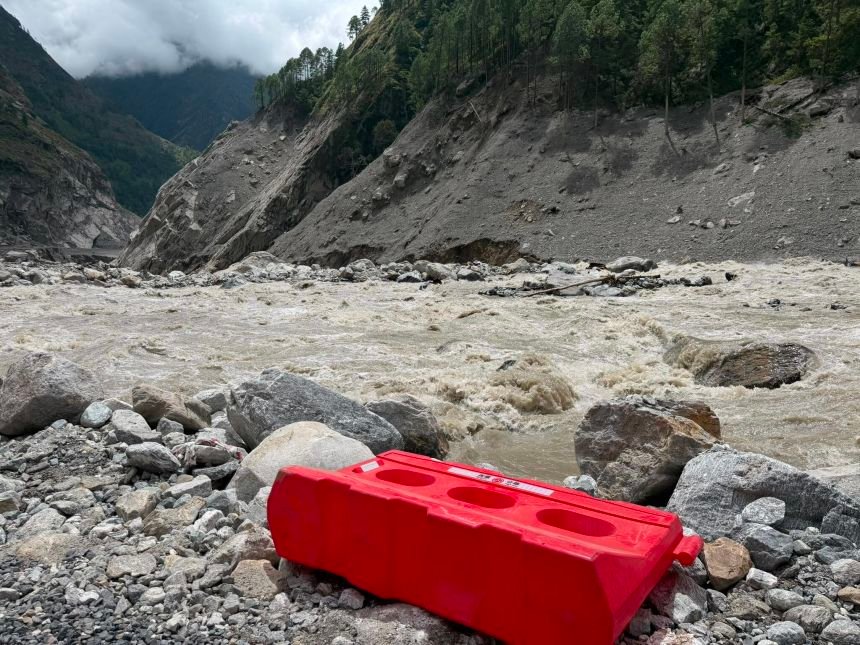
The scene at the flood-battered Gyirong Port in China’s Tibet Autonomous Region, on September 6, 2026.Simone McCarthy/CNN
Just getting to this part of Tibet is an effort; the distances in this region are vast. The CNN team joining this trip drove roughly eight hours from the Tibetan regional capital of Lhasa to Dingri, a city near the Nepal border on Saturday, through altitudes of up to 13,000 feet (nearly 4 kilometers). Getting to the port, which is at a lower elevation of 6,000 feet, took another six hours from Dingri, which has the closest airport.
A narrow, double-lane road leading to the port winds along pine-covered mountains, with countless hairpin turns. These roads were only cleared on Wednesday – seven days after disaster struck – finally allowing thousands of rescue workers to enter the zone along with heavy machinery. Previously, a smaller number of responders trekked in or arrived by boat or aircraft.
“We reached the core area on foot because the road had been washed away. We had to trek through the mountains and cross over them to get to the hardest-hit area.“ Yang told CNN on Sunday.
Rescue efforts in the past 11 days have also been slowed or stalled at times by the risk of secondary disasters, including landslides and breaches of new, so-called barrier lakes that formed after debris and mud dammed parts of a nearby river. Those conditions, as well as heavy rains and mountainous terrain, made access even by air difficult at times.
“We’re mainly focused on intensive search and rescue operations at this stage,” said Zhang, who has been working at the site since access opened on Wednesday.
“Our approach is to dig one layer, search that layer, and then clear it before moving on to the next. We’re digging very carefully, searching thoroughly and clearing the debris layer by layer to see if we can find any of the deceased.”
Authorities have also warned of potential further collapse around the glacier on Langtang Lirung mountain in Nepal, which cracked and broke off, triggering the August 26 landslide and flooding.
Last month’s disaster may be a catalyst for more intensive monitoring of these risks, as well as shared data and early-warning systems between China and Nepal, especially as the risk of natural disasters is growing and becoming more unpredictable with climate change.
But for now, the focus remains on recovery – and for the families of the missing, getting information about what happened to their loved ones, including those who are believed to have been in Gyirong Port on that fateful morning.
RBA officials are concerned a severe El Niño could drive food prices higher and create a further headache later this year, when the central bank is contemplating whether it needs to hike interest rates again. Photograph: Sam Mooy/AAPRBA officials are concerned a severe El Niño could drive food prices higher and create a further headache later this year, when the central bank is contemplating whether it needs to hike interest rates again. Photograph: Sam Mooy/AAP
Record strength El Niño could mean bigger supermarket bills for Australians, experts warn
Predicted hot and dry weather in growing areas in eastern Australia identified as ‘one of the key issues’ that will affect food prices over next 12 months
Follow our Australia news live blog for latest updates
Get our breaking news email, free app or daily news podcast
The most severe El Niño weather event on record threatens to push food prices higher this year, experts say, piling pressure on households already struggling with the post-pandemic spike in grocery bills and complicating the Reserve Bank’s efforts to bring inflation back under control.
The Bureau of Meteorology has forecast El Niño will peak in late spring or summer and “reach levels above the warmest observed since reliable records began in 1950”.
Michael Harvey, a consumer food analyst at Rabobank research, said the predicted hot and dry weather in key growing areas in eastern Australia was “clearly one of the key issues that will have an impact on food pricing over the next 12 months”.
The Food and Agricultural Organisation in its latest update reported rising weather-related threats are already being reflected in high and climbing global commodity prices.
“It’s a very volatile time, and there are lots of risks around cost re-escalation in the food system,” Harvey said. “There is absolutely risk of food inflation coming through at the consumer end.”
Not all commodities are heading in the same direction, however. For example, dairy and meat prices are beginning to ease after a big recent rise as the underlying fundamentals in those markets shift independently of the looming weather event.
In Australia El Niño created a risk for what is still expected to be a strong winter wheat crop this year, Harvey said.
“That will be the big thing to watch, as well as the spillover effects of that into things like feed grains,” he said, adding that the ultimate impact would be clear by the final quarter of the year.
Even absent hotter and drier weather, overseas shocks have already pushed commodity price benchmarks higher this year, which are linked to local markets through the export trade.
Dennis Voznesenski, CBA’s agricultural economist, said global wheat prices are up by about a third since the start of July, versus about 9% in Australia.
The extreme weather warnings also come as the global oil benchmark, Brent crude, pushed past US$97 a barrel on Monday afternoon to be 35% higher since the start of July.
With diesel prices on the rise again – a key cost for farmers – fertiliser suppliers have also warned of ongoing supply disruptions that will keep prices structurally higher.
Meanwhile, Russia and Ukraine’s record grain harvests are struggling to find their way to international markets after tit-for-tat attacks on critical Black Sea ports.
“A third of global grain exports are stuck right now,” Voznesenski said.
The past five years have seen rapid increases in prices across a range of supermarket goods, contributing to an entrenched cost-of-living crisis across Australia.
In the five years to June, for example, the cost of staples such as breads and cereals, dairy, and other products such as jams and eggs, jumped by between 28% and 30%.
In comparison, in the preceding five-year period to mid-2021, the cumulative increase in these supermarket shelf items was 3-6%, according to analysis of quarterly Australian Bureau of Statistics data.
RBA officials are concerned that a particularly severe El Niño could drive food prices higher and create a further headache later this year, at a time when the central bank is already contemplating whether it needs to raise interest rates again.
But Jonathan Kearns, the chief economist at Challenger, said it was not easy to show a clear link between El Niño events and higher food prices, saying there were a range of costs – from labour to freight and packaging – that often played a bigger role in determining how much Australians pay at the checkout.
“It won’t be a first-order influence on overall inflation, but if you get a little bit extra from food prices, then it’s unhelpful,” Kearns said.
Austria’s Islamic headscarf ban in force as under-14s go back to school
Getty Images
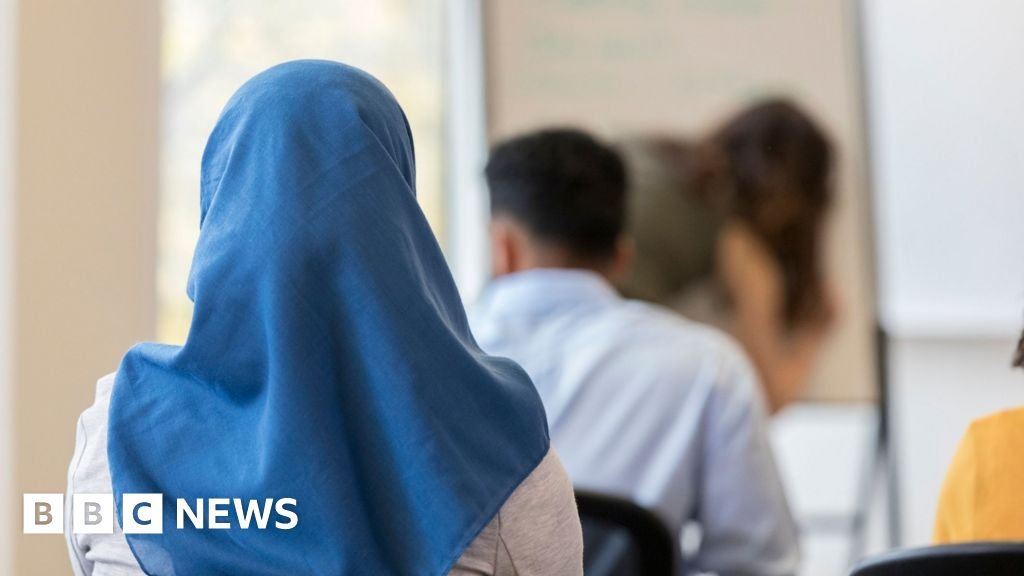
As the new school year begins in Austria, a law banning headscarves in schools for girls under 14 has gone into force.
The law forbids “traditional Muslim” head coverings, such as hijabs or burkas, in public and private schools across the country.
Integration Minister Claudia Bauer, from the conservative People’s Party (ÖVP), says the headscarf is “a sign of oppression and a means of controlling girls from the earliest childhood”.
But critics say the new law is fuelling anti-Muslim feeling in the country and could be unconstitutional.
The law was brought in by the conservative-led coalition of three centrist parties, the ÖVP, the Social Democrats (SPÖ) and the liberal Neos. They say the law is a “clear commitment to gender equality” and is intended to protect the rights of young girls.
Carla Amina Baghajati, from the official Islamic Community in Austria (IGGÖ), told the BBC that the organisation “firmly opposes the ban”.
“We believe it unjustifiably restricts the fundamental right to freedom of religion and disproportionately affects Muslim girls,” she said.
“Rather than protecting children, it singles out a specific religious practice and risks excluding the very children it claims to support.”
The IGGÖ said it would support legal challenges by girls and their families “who believe that their fundamental rights are being infringed” and who wished to bring their cases before the Constitutional Court.
Teachers are expected to enforce the new ban if they see a child wearing a headscarf by holding a series of talks with the student and their legal guardians.
If there are repeated violations, child services must be notified and as a last resort, guardians could face fines of up to €800 (£685).
Getty ImagesAn 11-year-old student protests the ban in Vienna back in February with the banner “meine Kopftuch, meine Entscheidung” – “my headscarf, my decision”
Some teachers have expressed concerns about having to enforce the ban.
The Green Party’s Sigi Maurer accused Education Minister Christoph Wiederkehr, from the liberal NEOS, of “creating new conflicts and offloading them onto the teachers”.
She said teachers were “already under enormous strain” and that Wiederkehr wanted to “foist the role of police officers onto them” on top of their other duties.
The opposition far-right Freedom Party (FPÖ) says the current ban doesn’t go far enough. It is calling for a general prohibition on headscarves and face coverings in schools for students and teachers alike.
The FPÖ’s Ricarda Berger said there was “no place for political Islam in Austria, and certainly not in our schools”.
Austria’s Chancellor Christian Stocker, leader of the ÖVP, recently called for a constitutional ban on political Islam, telling Austrian public broadcaster ORF he did not “want to live in an Islamic state”.
In France there has been a ban on wearing any conspicuous religious symbols, including headscarves, turbans and kippas, in schools for more than 20 years.
The Austrian law differs from French legislation in that it specifically targets head coverings worn by Muslim women.
Austria, like several other European countries including France, Belgium and Denmark, bans the full face veil (niqabs or burkas) in public.
Baghajati said the IGGÖ was concerned about “a troubling trend” across Europe “in which complex social challenges are reduced to symbolic measures aimed at minority groups.”
“Such approaches may generate political attention, but they rarely solve the underlying problems,” she said.
The legislation proposing the ban was passed in parliament last year, in December
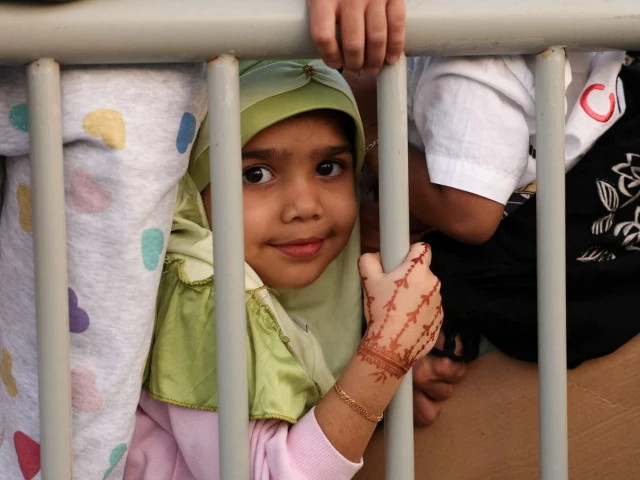
ReutersSeptember 07, 20261 min readA child wearing a headscarf in Doha, Qatar. Photo:
Austria’s ban on headscarves for under-14s faces an initial test on Monday as schools reopen in Vienna and other states, with groups including the country’s main Muslim organisation denouncing it as discriminatory and legal challenges likely.
Austria’s ruling coalition of three centrist parties proposed the ban in schools, arguing it was acting to protect girls’ freedom. The legislation was passed in parliament in December with the support of the far-right Freedom Party. Only the smallest party in parliament, the left-wing Greens, opposed it.
The group that formally represents Austria’s Muslims, the Islamic Religious Community in Austria (IGGO), has said the move was an infringement of fundamental rights, pledging to fight it before the Constitutional Court, which rejected challenges in July because the legislation had not yet gone into force.
The court ruled in 2020 that a previous ban, which applied to under-10s in schools, was illegal because it discriminated against Muslims and the state had a duty to be religiously neutral. Going against that principle requires special justification, it held.
Read:Islamic banks told to scrap abaya dress code
Asked by national broadcaster ORF if the court would overturn the new ban, Education Minister Christoph Wiederkehr said, “You can never be completely certain.”
“We in the government carried out very intensive consultations, and we in the education ministry tried very hard to write a law that complies with the constitution,” Wiederkehr said in the interview broadcast on Monday.
Left-wing pupils’ organisations have called for protests. The new school year starts on Monday in three of Austria’s nine states — Vienna, the surrounding state of Lower Austria, and Burgenland, all in the east — with the rest following next week.
The legislation stipulates that a school must hold discussions with any pupil defying the ban, after which a fine of between €150 and €800 ($175-$930) can be imposed.
LATEST
Iran can ‘ground’ American forces anywhere: Iranian naval commander
Trump posts map appearing to show North America, other territories as part of US
AI could pose ‘existential’ risk to humanity, UN rights chief warns
Far-right win leaves Germany’s Merz shaken as AfD plots path to power
Gaza Peace Board high official warns roadmap failure could make two-state solution impossible
Bangladesh’s Sheikh Hasina loses right to appeal death sentence: prosecutor
MOST READ
PTI’s Hammad Azhar arrested in Multan
56 civil defence officials face disciplinary action in Punjab
Afridi vows not to leave Sindh without launching street movement in Karachi
Iran’s army chief says US seeking to offset battlefield setbacks through economic pressure